Games That Master Environmental Storytelling
21 May 2026
Ever walked through an abandoned room in a game and instantly known what happened there—without a single word of dialogue? That, my friend, is the beauty of environmental storytelling. It’s the art of letting a space speak for itself. Great games don’t just tell you a story; they let you feel it, piece it together like a detective rummaging through breadcrumbs of worldbuilding.
In this article, we're diving deep into the games that absolutely nailed environmental storytelling—ones that don’t just build a world but bring it to life through atmosphere, clues, and visual tone. If you’ve ever stared at a bloodied teddy bear or a broken music box and felt a chill run down your spine, you already know the magic I’m talking about.
So, grab your flashlight and let’s explore the games that are masters of this silent, subtle craft.
What Is Environmental Storytelling, Anyway?
Before we get into examples, let’s make sure we’re on the same page. Environmental storytelling is a technique used in game design where the setting itself conveys narrative. No dialogue. No exposition dumps. Just visual cues, items, architecture, lighting, and sound design working together to reveal backstory or evoke emotion.Think of it like visual poetry. It lets you feel the story rather than be spoon-fed it. Done right, it can be more impactful than any cutscene or monologue.
1. The Last of Us Series – Heartbreak Written in Dust
It’s hard to talk about environmental storytelling without mentioning Naughty Dog’s masterpiece, The Last of Us. The series paints a world ravaged by a fungal apocalypse, but the real gut-punches? Those come when you explore the world.Walk into an abandoned house and you’ll find notes from a family slowly losing hope. In a child’s bedroom, you might see drawings clinging to happier times. There’s no narration shouting “This is sad!” but you feel it—because the world shows you.
Even level design weaves narrative. Safes contain journal entries that add layers to side characters you never even meet. Piles of burned bodies, graffiti-covered walls, improvised barricades… They all scream out pieces of a bigger story. You’re never just playing as Joel or Ellie. You’re walking through a graveyard full of stories.
2. Bioshock – Welcome to Rapture
Descend into the drowned city of Rapture, and you’ll quickly realize that Bioshock isn’t just a shooter—it’s a living, breathing cautionary tale.The city’s Art Deco design tells a story of ambition gone rogue. Audio logs fill in gaps, but it’s the environment that paints the full picture. You’ll pass blood-streaked hallways, broken statues, shattered glass—each with their own unsettling tale.
As you explore, you piece together the dream that Rapture once was—and the nightmare it became. The real genius? You’re never told what happened. You see it.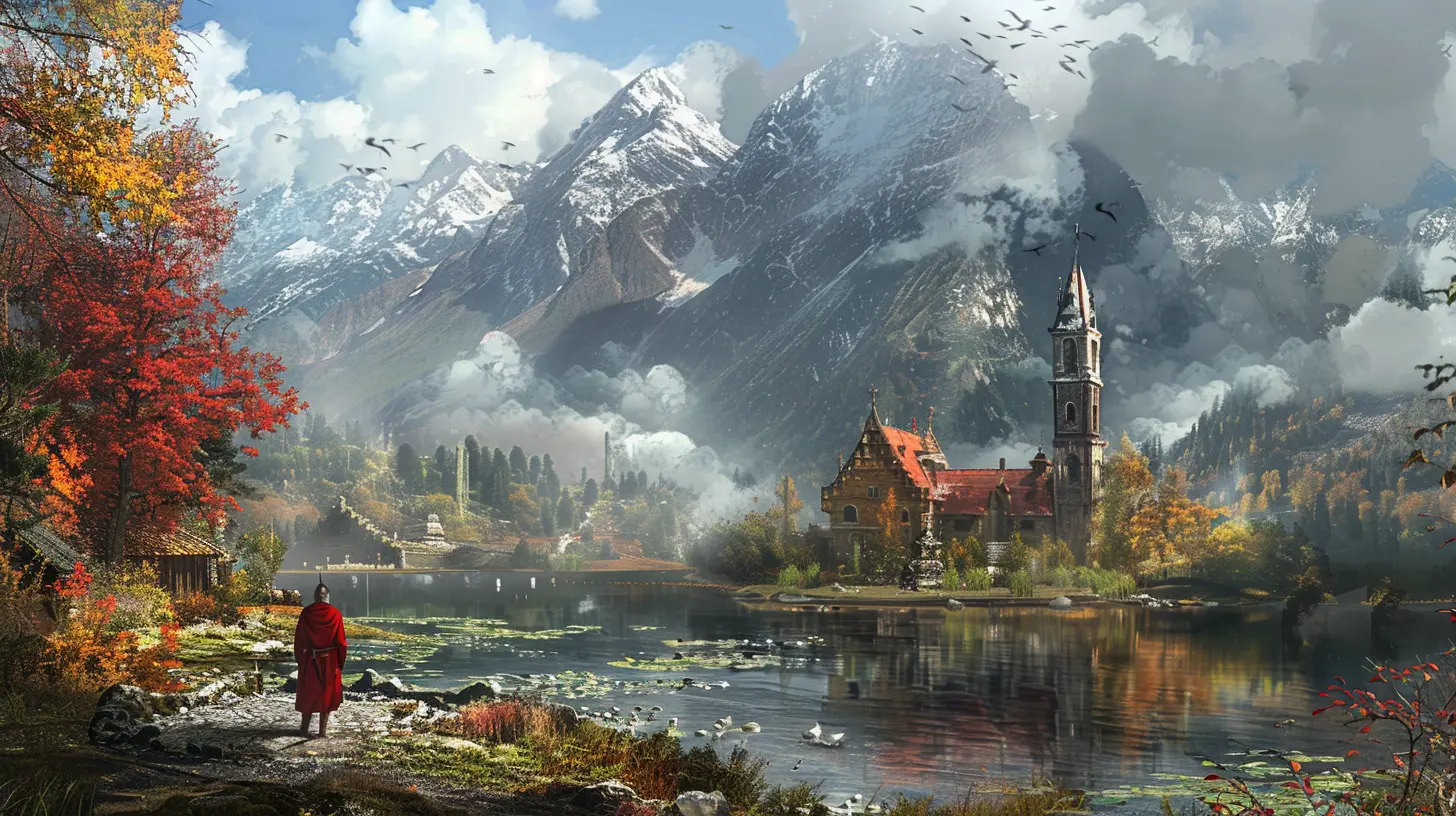
3. What Remains of Edith Finch – A Family Album in 3D
If environmental storytelling had a heart-wrenching poster child, it’d be What Remains of Edith Finch. This game is a walking storybook, where each room in the Finch house is a frozen moment in time—untouched shrines to lost family members.Every room feels lived in, painfully personal. The teenage daughter’s sealed-off bedroom with glow-in-the-dark stars, the baby’s bath toys left in the tub—it all tells you things words never could.
It doesn’t just show you their lives; it immerses you in their final moments. Each memory is stylized to match the character, blurring the line between reality and imagination. This isn't just storytelling—it’s storytelling with soul.
4. Dark Souls Series – Cryptic, Unforgiving, and Genius
Now let’s talk about Dark Souls. These games don’t care to explain themselves. No journals, no audio tapes. Yet somehow, they have some of the deepest lore in gaming.The ruins, statues, enemy placements, even the way corpses are slumped—all whisper fragments of a fallen world. You stumble through catacombs and crumbling castles, and the deeper you go, the more it feels like you're reading a history book—written in ruin and decay.
Want to know about a king’s descent into madness? Examine the throne room. Wonder why a boss was crying? Look at what’s chained around her. The game dares you to dig, to notice. It’s storytelling for sleuths—and the community eats it up like mythology.
5. Gone Home – Subtle, Soft, and Shockingly Human
At first glance, Gone Home looks like a horror game. You arrive at a creaky, near-empty house during a storm. But instead of ghosts, what you actually uncover is a deeply personal story of love and identity.Drawers, cassette tapes, crumpled notes—every item builds the narrative. There are no characters to talk to, yet you uncover a complete, complex family story simply through exploration.
It’s proof that environmental storytelling doesn’t need grandeur or tragedy to make an impact. Sometimes, all it takes is a teenager’s journal and a well-placed Polaroid.
6. Red Dead Redemption 2 – A Wild West Teeming with Untold Stories
Rockstar’s Red Dead Redemption 2 does more than give you a playground—it gives you a breathing world bursting with micro-narratives.Abandoned mining towns, burnt-out homes, skeletons slumped at desks—all subtly tell stories of ambition, betrayal, or just plain bad luck. You can stumble upon a staged murder scene, or find a cabin where something… macabre happened.
The world never stops hinting at tales far bigger than the main quest. Every corner holds a story waiting to be uncovered. It’s not just the Wild West—it’s a scrapbook of lost dreams.
7. Control – Welcome to the Oldest House
Control by Remedy Games is weird in all the right ways. The entire game takes place inside a shifting, brutalist government building that contains supernatural anomalies.Here, storytelling comes not just through documents and recordings, but through architecture itself. You enter rooms that make no physical sense, interact with items that bend reality, and feel like you’re inside a Kafka novel dipped in sci-fi.
Even the janitor’s closet feels like it has secrets. The Oldest House doesn’t just contain mystery; it is the mystery. The environment is the character.
Why Environmental Storytelling Hits So Hard
You might be wondering—why does this style of storytelling feel so much more powerful than traditional methods?Simple. It trusts you.
Environmental storytelling hands you the puzzle and says, “Go ahead. Figure it out.” It respects your intelligence and curiosity. It’s passive, yet deeply interactive. The story unfolds at your pace, often tailored by where you go and what you choose to look at.
It’s like wandering through a museum where the artifacts whisper their own stories—no tour guide necessary.
Honorable Mentions
We’d be here all day if we listed every game that nails this narrative technique, but a few more deserve quick shoutouts:- Half-Life 2 — You might not notice the storytelling on the first play, but it’s everywhere. From propaganda posters to Vortigaunt labor camps.
- Inside — A side-scroller that tells you everything and nothing. You leave with more questions than answers—in the best way.
- Firewatch — Dialogue is key, but don’t ignore the environment. The forest is filled with quiet, contemplative clues.
- Prey (2017) — Set in a space station filled with mimics and mysteries. You learn about the crew through their emails, workstations, and sometimes... their corpses.
Final Thoughts: The Silent Power of Spaces
Environmental storytelling proves that you don’t need epic cinematics or endless dialogue to tell a compelling story. Just the right setting, a few clues, and boom—you’re immersed.These games show that spaces can be as emotionally charged as any character. They let you live the story instead of merely watching it unfold. And honestly, that’s what makes these digital worlds feel so real.
So, next time you play, slow down. Look around. Read the room—literally. The story might be right in front of you, hidden in peeling wallpaper or a single, flickering light bulb.
all images in this post were generated using AI tools
Category:
Top GamesAuthor:

Greyson McVeigh
Discussion
rate this article
2 comments
Marlowe Pruitt
Silent worlds whisper tales, inviting players to unveil hidden truths...
July 13, 2026 at 4:25 PM
Greyson McVeigh
Thanks for your thoughtful comment! The subtlety of environmental storytelling truly draws players in, doesn't it?
Arianth McInnes
It's amazing how games can weave narratives through their environments. Each detail tells a story, inviting players to explore deeper meanings. When a game creates such an immersive world, it resonates on a personal level, making us reflect on our own experiences and emotions.
June 4, 2026 at 2:33 AM
Greyson McVeigh
Absolutely. When every detail sparks reflection, it deepens the connection between players and the game world. It transforms the experience into something truly personal.